Business programme
Start-Up, Scale-Up by Lloyds Bank Academy
Learn for yourself
Money, digital, career skills
Learn for business
To help start up and grow
Start-Up, Scale-Up by Lloyds Bank Academy
Start-up, Scale-up

Embed your growth plan in your business.
Communicate and lead the changes needed.
Fund your plans for growth.
If you haven't downloaded it yet, then you can do that now. Otherwise open up the version you've saved and update the notes and activities as you learn.


Lesson takes: 15 minutes
Chapter 1
3 minutes
Hopefully, at this point you have a list of growth methods that could help you to grow.
As a reminder, these could be:
Now it’s time to work out if these growth methods can work for you. This will you help you start to prioritise and embed them. Let’s start with finances.
When you’re planning for growth, finances are key. How much will it cost to grow in the way you want? Will you need funding? How can you predict which growth methods are likely to be profitable?
This section will help to assess your finances to understand what growth will cost and the return you might get.
For this, you’ll first need to write down your expected costs. You may know some of these already. Estimate the rest – think about both fixed and variable costs.
One-off costs
For equipment, tools and materials.
Regular outgoings
Like subscriptions, maintenance and consumables.
People costs
To grow and develop your team
You’ll need to work out the level of sales or revenue you need to cover costs. Aim to fund your growth plan without overstretching your finances. This also helps you set realistic sales targets. Plus, you’ll start to see the potential impact of growth on your finances.
Having a healthy cash flow can help. Investors see it positively too. It shows you’re able to meet your short-term costs like paying bills, wages and suppliers. With a solid cash flow, you’ll be more able to cope with market changes.
To work out your cash flow, look at each of your growth methods in turn, and work out how much revenue you would need to cover your estimated costs.
Use these to decide if you can fund these through retained earnings. If not, you know you’ll need funding from other sources.
Think about reviewing your cash flow projections regularly. This will help you make sure you’ve got the means to support your growth plans.
Start to build a cash reserve for contingencies if you can. It can help spot ways to improve your cash flow, too.
Here are a few things you should think about adding to your growth plan:
You'll need to share these with potential investors. So take time to make them as accurate as possible. Base them on your growth objectives, market trends and past records. Include projected income statements, balance sheets and cash flow statements for at least 3-5 years if you can.
Compare your financial performance and growth plans with others in your sector. This will help you understand your relative strengths and weaknesses. You can then use this to refine your growth methods. It may also help you see chances to stand out in your sector.
Limited companies must publish their financial statements each year, so this could be a good starting point.
Find out how others are doing:
We have more detail on planning and managing your finances in the Set up your business stage of the programme.
There’s also a handy business guide on how to write a business plan. This includes what to capture when you prepare a financial forecast.
Chapter 2
7 minutes
There may be new or different laws or regulations to follow as you grow your business. In this chapter, we’ll look at a few examples. First, let’s recap on the key differences between laws and regulations.
Laws:
Regulations:
Now we’re going to look at how laws and regulations could impact your growth methods.
Maybe you’re looking to expand or move into new markets. If these are overseas, there may be local laws that apply. Other countries may handle legal disputes differently, too. Visit these new markets as part of your due diligence. Get to know the local trade customs and practices. Meet potential customers. If you need to, seek local legal advice too.
If you’re looking to trade overseas, think about:
Need more advice? See the Department for International Trade’s range of resources.
Our International Trade Portal also has free tools and guides to give you practical help.
As you start to grow what you offer your customers, there are laws to protect both you and them.
Select the options that apply to you, to find out more.
If you've got an idea for a new product, you'll want to protect that idea. You may need to patent your product, or register its name or design. Not sure which of these applies? The Intellectual Property Office (IPO) has a toolkit to help you. It's free to register and a good source of information.
Providing new services? You may need to apply for a licence. The government has an online service that tells you if you do. See also their guidance on the Provision of Service rules.
Does your product or service development mean you'll be starting to use food in any way? The Food Standards Agency is the regulating body. You may need to register as a food business. This is free and you can do it online.
It's worth doing if your growth plans mean you're starting:
As you grow your business, you’ll want to reach out to new and current customers. Any marketing materials you send them need to follow the Advertising Standards Authority (ASA) rules. Check their website for general and channel-specific advice.
If you’re using new tools to hold or use customer data, check you meet privacy and data protection laws. This also applies if you’re asking for or using this data in a new or different way.
The main UK law here is the Data Protection Act. The Information Commissioner’s Office (ICO) has resources to help you make sure you’re following this law. This includes a self-assessment tool and one for sole traders and small business owners.
If your growth plans mean you’ll be starting to process personal data, you need pay a fee to the ICO. Not sure if this fee applies to you? Use their online tool to find out.
Here are a few things to think about:
GDPR rules apply to Europe and the UK.
Trading elsewhere? You’ll need to check the privacy and data protection rules in the relevant countries.
As you grow your digital toolset, think about how you and your team will use it.
This may mean you need to:
Increase cyber security
Protect your new systems and data.
Train your team
Set aside time for this, before you launch new systems
Promote best practice
This may be through training, guidance notes or policies
Are you building or updating apps or a website? Bear in mind that this needs to be accessible. The Equality Act covers both digital and physical access to services. This is quite high level and you may find the Web Content Accessibility Guidelines (WCAG) give more detail.
These guidelines apply to all UK public sector organisations. As a private business, you can use them to help make sure you’re meeting the Equality Act. Plus, they can help you reach a wider audience.
If you’re building a new website that sets cookies, the ICO have guidance on this.
Check that any website, app or social site that asks for personal information meets privacy and data protection laws.
As your business grows, you may find you need more people to help out. If you’re a sole trader, how do you feel about this? It can be both exciting and daunting at the same time. Even if you already have others working with you, you’ll need to plan carefully as this team grows. So let’s start by looking at some of the key laws that apply here.
You need to do this fairly. When you write your job adverts, they mustn’t discriminate.
Make sure they don’t imply that any of these are barriers to the role:
The same is true in an interview. So you can’t ask whether someone is planning a family for instance. ACAS has help and advice on how to recruit fairly.
When you hire someone, they’ll have a contract of employment. You’ll also need to sort out PAYE, National Insurance and pension contributions. The GOV.UK site has a handy checklist to take you through the whole process.
The law protects employees in various ways:
Health and Safety rules
Keep people safe in the workplace.
Data Protection law
Keep their personal data safe.
Holiday entitlement
Plus the right to take time off work for other reasons.
Sector-specific guidelines
These apply in certain industries.
You can find out more from these organisations:
When you’re starting to grow your team, you may not be thinking about them leaving. But it’s important to have the right policies in place so everyone is clear about what to expect. This will include things like notice period and pay.
There are different rules depending on how people leave. For instance, your team have certain redundancy rights. ACAS can give you guidance on the different ways that a contract can end.
Chapter 3
2 minutes
By now, you’re likely to have a list of laws and regulations to check. Maybe you’re starting to make a note of policies to change and other tasks. Sometimes, this can start to feel overwhelming.
It’s useful to make a note of everything that you might need to follow up, while it’s fresh in your mind. You may not have the time to do the research or update your policies right now. So it’s a good idea to build a checklist that you can refer to later on. This helps to reduce the stress of trying to remember what you’ll need to do.
It doesn’t matter how you jot this information down, as long as it makes sense to you. So use a format that you’re comfortable with.
This could be a digital document or spreadsheet. Perhaps you prefer to use a notebook or a mobile app. We’re going to suggest something that works in both digital and paper formats.
Step by step:
Now you’ve built your checklist, you can add to it at any time. This will form an important part of your growth plan. So when you’re ready, you can start to work through the actions on it.
Chapter 4
3 minutes
The things you can do to grow your business can have tax implications, so it's important to let HM Revenue & Customs (HMRC) know.
In this chapter, we'll equip you to understand the potential tax implications of your growth, so you know when you need to tell HMRC.
Here are some examples of what you need to tell HMRC:


Lesson takes: 14 minutes
Chapter 1
3 minutes
You have clear goals for where you want your business to be. No one else has the same connection as you. You want others to know these goals and how to reach them.
You’ll want to share your plans with:
They’re all likely to want to know the reasons behind your plans.
So, think about how to present these in a compelling way. Your aim is to inspire others so they’re as excited about your plans as you are.
In this chapter, we talk about your team. You may not have or plan to build a team at this stage. You’re likely to have others who will be helping you grow your business, though. So think of these people as you read this, to see how it applies to them.
Share your goals clearly, to:
Before you talk with others, take time to think about your approach. You may be very excited about your growth plans and want to share your ideas. How can you do this in a clear and appealing way? Think about the key message you want to send. Are you rallying them to action? Reassuring them? Asking them to do more or different tasks?
Think about your team and how they might respond. You’ll need to allow them time to absorb the changes they face. Be mindful of their emotions and how they might react. Even if they’re on board straight away, they may have worries about what this means to them. For instance, you may be planning a move to larger premises. Will this mean they need to travel further? This could affect their lives outside the workplace.
Encourage people to share their concerns and ask questions. Check for understanding by asking open-ended questions. This way, you’ll learn where they need support and motivation.
Questions your team may have:
Do you know the answers to these questions? If you do, you can think about how to respond in a way that works for your team. Maybe you can’t give them the clarity they need right now. If that’s the case, be honest. It’s OK to say ‘I don’t know’ or that it may change.
The important thing is to keep the conversation going. This will help your team adjust, and encourage them to be part of the growth process.
As you move the business forward, keep sharing your ideas and updates. Encourage an open two-way conversation. This helps to support your team to express their concerns and make suggestions.
Communication doesn’t end when you reach those growth goals. Celebrate success with your team! Give them the chance to reflect on their experience and share their thoughts and ideas on future plans.
Chapter 2
5 minutes
As a business owner, leadership comes with the job. What you say and do influences those who work with you, every day. You want to get this right, but there isn’t just one ‘right way’ to lead.
There are many different leadership styles, but what works for someone else may not be right for you. The skills you need will depend on you, your business and the people who work for you. The goal is to strike a balance between informing, persuading and engaging others.
To start, look at what you want to achieve. The way you lead should align to your overall vision and growth goals. Keep this in mind as you work through our list of common leadership skills.
If you're looking to gain more leadership skills, supported by Skillsoft Percipio, we have extended our business offering by giving you free and exclusive access to a collection of their business and leadership training.
With hundreds of courses and learning paths to choose from, this offers you the chance to learn a broad range of business skills from product management to productivity and collaboration. To start your learning and boost your leadership skills, sign up on Skillsoft’s website today.
Truthful and sincere communication helps to build trust. Own your mistakes. Acknowledge everyone’s contribution to successes. All these things show that you lead with integrity. When people see this, they’re more likely to trust you’re going to do the right thing for the business - and for them.
Above all else, the good leader needs integrity.
Recognise each person’s skills and strengths, and let them use these to help you reach your goals. Support and encourage your team to grow and prove their skills. When challenges arise, listen to their ideas and solutions.
The key to good delegation is giving each task to the most suitable person for it. Trust them to own the task and praise them for a job well done. When things don’t go to plan, be their mentor. Give expert advice to guide them towards better outcomes.
If you do this, your team will see that you trust them to take responsibility. This will help to reduce your own task list, too.
Delegation, step by step:
As we look ahead into the next century, 'leaders will be who empower others'.
Know that you and your business will experience ups and downs. Focus on your end goal and don’t let small everyday issues distract you. You’ll need to handle issues flexibly. Sometimes this involves reaching a compromise with others.
For each decision you make, ask: will this help to achieve my overall goals for the business? If the answer is yes, it’s likely to be a good choice. If not, you may need to think carefully about whether it fits in with your plans for growth.
Keep in mind what you want to achieve. For everyone to work together to achieve your growth goals.
When others see you living by your business’ values, it can inspire them to do the same.
For example, if you show confidence in tackling issues, they’ll start to do the same. Your team looks to you to guide them through the highs and lows of the growth process.
Let your team see that you’re working with them, through all the highs and lows. Celebrate together. Be willing to help out to get the job done. Make it clear that you see yourself as part of the team, not separate to it. Doing this can help you earn their respect.
Use creative approaches and encourage your team to do this too, to meet challenges and achieve goals in ways that are different to your competitors.
Logic will get you from A to B. Imagination will take you everywhere.
Having a growth mindset is key to becoming a good leader. If you’re endlessly curious, this is a good sign. So keep learning.
Bear in mind that your leadership skills will develop over time.
Take situational awareness. A good leader is able to foresee potential issues and handle them before they arise. They can see opportunities that others may miss.
Sometimes it’s only after a particular setback that we can see how we could have achieved a different outcome. So it’s important to keep reviewing your approach and adapt it where you need to.
Try again - that's not quite right!
Hint: It can be tricky finding the right level of control. You want to give the task to the right person. Then you want to support them, while letting them control the task.
That's right!
The best person for the job might be you or someone else. It all depends on what the job is and who is best at it.
Chapter 3
4 minutes
Hopefully, these have given you some ideas on how to lead your team as you grow your business. You may find some are easier to adopt than others. Note the ones you need to work on. Being self-aware and knowing your own strengths and weaknesses will help you become a good leader.
It may seem rather lonely being a leader, though. Others look to you for guidance. So where can you find this, too?
The good news is that there are plenty of people who can help.
Support networks
Mentors
Business consultants
Virtual assistants
It’s good to build a support network, as you grow into your role as leader. You may already have one, that you can extend to meet your changing needs as your business grows. These networks can be a mix of online and face-to-face contacts.
Your network could include:
If you need support that’s more personal to you and your business, a mentor might be the answer. They can help you learn more about yourself and your goals.
Mentors can:
When looking for a mentor, pick someone you can trust. They should be open with you and give you useful feedback.
Look at people who have leadership experience. Who do you respect? It could be someone you know who motivates you and can push you to grow. Maybe it’s a local business owner with a good reputation. You may want to research influencers or experts online. If you have a few people in mind, think about how close you feel to this person. You’ll need to feel at ease talking to them.
Whoever you pick, meet them with an open mind and be willing to learn from them.
One option is to connect with volunteer mentors through Digital Boost. They can connect you with volunteer experts in strategy, marketing, digital, finance and more. Their platform can help you match with relevant business mentors.
As you grow your business, you’re likely to be busier than ever. Business consultants can share the load by giving expert help.
They can:
Usually, you’d hire one for a short or fixed period of time. They can help with one or more aspects of your business. Some are experts in a particular area, like Human Resources or IT. They tend to work by spending time with you to see how you run your business and to learn your plans for growth. Then they’ll come up with ideas and solutions to help you grow.
To find someone who meets your needs, speak to others in your sector. They may have recommendations. You could also check online reviews.
When you meet them for the first time, ask questions to check they are right for your needs. They’ll be working for you, so it’s important to set expectations up front. Agree rates, what you want from them and timescales. Tell them your growth goals, and how you’d like them to help you reach these.
When you run a business, there’s so much admin to do. It’s tempting to save costs by doing this yourself. As your business grows, you may find yourself bogged down in these day-to-day tasks. They might even be stopping you from moving forward as quickly as you want. If this is you, virtual assistants can be a good source of help.
Virtual assistants are there to ease your workload. They can take on some of the more mundane jobs so you’re able to focus on your growth plans. Some specialise in certain tasks. This can be a low-cost way to improve efficiency.
They can:
You can find virtual assistants directly or through a marketplace like Upwork or TaskRabbit. Costs will vary, depending on the service you need and how much demand there is. It’s always good to ask around for recommendations.
When you find someone you think meets your needs, look at their earlier work and vet them carefully. Agree their rates, what you expect for this, and timescales. Be aware that some will be overseas. This means they may not be around in your own working hours. So plan your meetings with them at a time that works for you both.
If you hire someone to do work for you, they may see personal or business details. Make sure they don’t share this information with others. You could include wording in your contract to do this or add a non-disclosure agreement.
Chapter 4
2 minutes
Whether you’re a sole trader or have a large team, you’ll need certain skills to grow. These will depend on what your plans for growth are. If you have others working with you, they’ll need to build their skills too. You may already have a few ideas about this. Maybe you’ve started to note down tools to learn or articles to read.
This chapter shows you how to work out what skills you and your team need. We’ll start, though, with the skills you already have.
Listing the skills you and your team have is a good starting point. Focus on the skills you’ll need to achieve your growth goals. This will help you delegate tasks and identify any areas where there are gaps.
There are many ways to do this. We’re suggesting you start with a skills matrix and carry out a gap analysis.
You can use a spreadsheet or do this on paper. This is a table with a list of skills across the top and names of your team down the left side. For each person, note the skill level for each of these skills. Keep this simple. Something like 0-3 where 0 is ‘no knowledge’ and 3 is ‘expert’.
Use the template in your workbook to complete a skills matrix for you and your team. There’s more space at the back of the book if you need it. If you prefer, use a spreadsheet.
Now you have a list of skills and can see who has these. It’s a good idea to check you’ve listed all the skills you need. Maybe review your growth goals and methods with someone else. A second pair of eyes can be really helpful here.
Once you’re happy that you’ve captured everything, look for the skills gaps. What tools or areas do you have no or little knowledge on? These are where you’ll need to learn. This could be a training course, online tutorial or speaking with an expert.
Use the space in your workbook to note down your skills gap notes. Start with a list of areas where you need to upskill. Jot down any ideas you have on how to meet your skills needs.

Lesson takes: 26 minutes
Chapter 1
5 minutes
Watch this video to learn about ESG and how it can help your business.
ESG can be good for business. It impacts your customers, investors and your team, too. Let's take a look at some of the impacts it can have on the different people you interact with as a business.
In the UK, 1 in 3 of us regularly buy eco-friendly products. So it makes sense to offer products and services that meet this growing need. Customers are also four times more likely to buy from a brand with a strong sense of purpose. What did they feel was important? Fair treatment of all employees, plus products and services that reflect the needs of people today were the top two factors.
Sustainable organisations don’t just appeal to customers. They attract investors too. A recent study found 89% of global investors include ESG factors in their approach.
60% of UK workers research an employer’s eco credentials as part of their job search. Focusing on sustainable initiatives, such as working from home and cycle to work schemes shows a caring attitude towards your team members and their communities.
Read more about the four-pillar strategy in the 1.5˚C Business Playbook.
Chapter 2
1 minute
To improve your sustainability, you need to take steps to reduce your carbon footprint and aim for 'net zero'.
Your carbon footprint refers to the total amount of greenhouse gases released into the atmosphere because of your activities.
Greenhouse gases are gases in the Earth's atmosphere that trap heat. They let sunlight pass through the atmosphere but prevent the heat from leaving.
Net zero is when the amount of carbon dioxide you add to the atmosphere is no more than the amount you take away through sustainable actions.
You can use carbon measurement tools to see where you could reduce your emissions. There are free-to-use tools online that can help. These include the Carbon Footprint Calculator and the Greenhouse Gas Protocol Calculation Tools. You can track your advances and monitor your organisations progress.
Smart meters can help you check your energy use. Energy monitoring systems take this one step further, to give you more detailed information. They will show you different areas of energy use, such as power-hungry equipment.

You can reduce costs by making these changes. Reducing energy use is a good place to start.
Look too at waste management, digital tools and creative recycling ideas.
Chapter 3
15 minutes
We’ve talked about how to measure environmental sustainability. So where do you start?
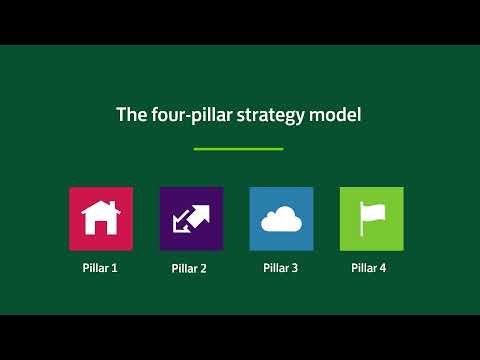
Let’s look at each of the four pillars in the video. These are:
Reduce your own emissions
Reduce your value chain emissions
Integrate climate into your strategy
Influence climate action in society
Working from home can reduce traffic in cities and reduce pollution. It can also help cut costs and waste, as people use food they have at home rather than buying lunch. This reduces the use of single-use containers.
Chat with your team about good working from home practices. These could include switching off devices when they're not in use or making the most of their local recycling options.
This could be as simple as hosting meetings and events online to reduce travel.
Cloud-based data options can reduce the storage used on your own device. This can also extend their life.
Think about smart heating. These can make sure you're only heating your premises when people are in them. You can do this by using thermostats, timers and motion sensors.
Other options include using digital controls on devices. These sense when the device isn't in use and can shut it down to save power.
Did you know, it takes 24 trees to make one tonne of paper? In 2023, the UK consumed 5.4 million metric tons of packaging papers. By going paper-free, you could save money. You can also improve efficiency, cut down clutter and reduce your impact.
Review your paper-based resources. Where could you go digital? Recycle what you don't need and change your processes. For example, using social media can reduce the number of paper-based flyers, brochures and posters you create.
How do you package your products? Try exploring other options. There's plenty of ecological and recyclable ones to try.
What cleaning products do you use in your building? There are greener options for these too.
Switching to these options means you'll be putting fewer chemicals back into the environment. Most eco-friendly products come in green packaging too. So you'll be reducing your waste too.
Regularly check and improve your waste and recycling.
Check with your waste contractor to see if they recycle what you use. The waste taken can vary between companies. Plus, this may change over time, as the technology to process waste improves.
Always think about recycling or repurposing any equipment that you replace.
Is composting an option? You may need to check with the owner of your premises or your local council about this. You can put coffee grounds, non-plastic tea bags and other food waste into a compost bin.
Get back to basics and look at what you are using.
Thinking of buying something for your business? Ask yourself: do we really need this? What happens when we no longer want or need it?
What happens to the packaging? Are there upcycled or second-hand versions? This may be cheaper than new products. Plus, they often use higher-quality materials.
Do you keep equipment powered out of hours? This can be wasteful and expensive. Switching off will also help extend your equipment's lifespan, so it works better for longer. Why not create an easy 'switch on / switch off' checklist for your team?
Look at energy-saving options or other sources of energy. This might include:
An example
An engineering firm is now saving £596, and 3.5 tonnes of greenhouse gases a year. They did this by putting in place a ‘Switch Off’ campaign to make sure their teams turn off computers after work.
Case study from SME Guide to Energy Efficiency (PDF, 1,636KB) – Department of Energy & Climate Change
Reduce your emissions by working with others who have green initiatives. Take time to check potential suppliers to check their values match yours. Green providers has a list of suppliers that have green credentials.
Seek out local vendors and suppliers. If you work with a business that’s far away, you’ll be paying for transport costs. Nearby options can save you money and reduce your footprint. Your local Chamber of Commerce may be able to help.
A supply chain is only as strong as its weakest link. So, it’s important to look at the whole picture. Take Walmart’s ‘Project Gigaton’, for example. They aimed to reduce a gigaton of emissions from their supply chain by 2030. Between 2017 and 2021, they had already reduced over 500 million metric tons by working with suppliers. They focused on energy, waste, packaging, transport, and product design.
Work with your suppliers and vendors to reduce deliveries. Maybe you can group multiple orders together or arrange bulk deliveries? This will save everyone time and money and reduce your emissions.
Make sure you are sending a clear message to your team. They should be seeking out environmentally sustainable partners.
Review your existing strategy
A sustainable strategy is important for growth and development. To see the financial return, improved reputation and positive impact, you need to plan any changes effectively.
Create sustainable products
The worldwide call to action on climate change might inspire you to create a new product or service that actively helps. Whether you’re starting from nothing or adapting your offer.
Embrace technology
Technology can help cut emissions by up to 35% - and improve efficiency. Artificial intelligence (AI), analytics, and Cloud can help. Check out process automation too, and tools to help you track and report your carbon use.
This is just the beginning of your path to sustainability.
Creating a plan to achieve your goals can be hard. At the same time, it becomes worth it when it helps get to the benefits of being sustainable.
You can encourage industry and government to act by:
Reducing most of the impact of waste will be in the power of your team.
Pick the right time to share your climate action plans with your team. Encourage ideas. Explain the benefits, from the improved bottom line to the freedom to work from home. Take time to discuss any questions or concerns they have. Make sure they feel responsible for driving change.
Why not appoint someone in your team to be a sustainability champion? They can coordinate green initiatives, keep everyone updated and increase their own knowledge.
By taking decisive action, you can:
Set an example to others in your team and beyond
Encourage your customers to make sustainable choices
Drive change within and outside your organisation
Think about what you'd like to achieve. Take 5 minutes to reflect on each of the four pillars and note the top 3 actions you think you could start to adopt.
Chapter 4
2 minutes
The 'S' in ESG is all about how your business treats people.
We can measure this by looking at:
The way you treat your team, your partners and others around you.
The effect of your products and services on your customers and community.
The working practices of your suppliers, distributors and other partners.
People want to feel safe and happy at work.
They look for companies that show:
So how do you measure these?
Look at:
Your staff turnover rate, plus key or repeating themes from those who leave the business.
Metrics to show diversity and inclusion in recruitment, retention and progression.
Health and safety data, like accident and incident rates.
The best way to get an idea of how your team feel? Ask them! Use surveys or more informal chats to find out what they think it’s like to work for you.
As a business, you want to attract and keep customers. In return, they want products or services that are right for them.
You can measure this ‘getting it right for them’ by looking at:
When you look at your social responsibility, it’s good to check who you’re working with. This means your suppliers, vendors and others who help your business. You have a social commitment to them – and they have one to you. So look at how they treat their own customers (including you!) and employees.
Some things you can measure are:
Chapter 5
1 minute
Now we’ve looked at the social factors in ESG, let's look at a few ideas to get your started:
Create a 'purpose statement'
This links what you do to a broader, more meaningful benefit.
Support local community groups
Pick ones that are a good match with what you sell or provide.
Grow a diverse and inclusive team
Start by making sure you give equal pay for equal work.
Pick your partners and suppliers wisely
Make sure their ways of working and their ethics match your own.
Chapter 6
1 minute
Governance is about how you run your business.
It includes:
Earlier, we listed steps you can take to make your business more environmentally sustainable. One of the things to do first is check that you’re compliant. You’ll find sector-specific guidance on the Government’s website.
When you look at this legislation, check your key obligations. Typical concerns include the use of water, raw materials and energy. They also include pollution, carbon emissions and waste management. You can carry out your own risk assessment to spot areas of concern. Work with your regulator to make sure you work within their rules.
During our last two chapters, we looked at the social side of ESG. We listed key areas to focus on, for your team. You can put some of these in place by setting out workplace policies. These set the scene in terms of what you expect from everyone who works for you, and what they can expect from you.
Some laws address social issues, and these will guide you.
These include:
Chapter 7
1 minute
In this lesson, we’ve given you information you need to make a start.
This includes:
Remember that this is just the start. It can all seem scary at first. But there are many organisations and initiatives to help. You can get support with free audits, advice and other resources.
Here are a few organisations who may be able to help:
|
The Federation of Small Businesses |
Their website includes the small business sustainability hub. This lists resources and events to help you achieve your goals. |
|---|---|
|
Fit for the Future |
This environmental sustainability network offers resources and support for charities and other organisations. |
|
The Energy Saving Trust |
The business page of this website includes a range of tools, fact sheets and other resources. You can search by location or sector. |
|
Department of Energy and Climate Change |
This government department created the SME Guide to Energy Efficiency (PDF: 1636KB). This is full of practical ideas and real case studies. |
|
Local authorities |
These often manage grants and funding for improving energy efficiency and sustainable innovation. So it’s worth checking so see what’s available in your area. |
Some organisations offer ESG audits, but this is not currently regulated.
While the UK works to define a formal framework, you may find this article by the Sustainability magazine a useful source of guidance.
As you start to put ESG into your business, we have a range of learning resources with tips and guidance to help.
If you've finished all the lessons you need for you business and you're ready to complete your programme, fill out the survey.
This will help you to unlock your final programme benefits including your business coaching, access to further learning and our alumni networking events.
Want to go back into your previous stage and re-cap? Maybe you want to learn something you skipped over? Use the buttons to open up other topics.
Download the app to apply. You must be 18 years old or over.
*Lending subject to status. Eligibility criteria apply.
If you need help or have any questions, please do get in touch with the team.
Lloyds Bank Academy is committed to providing information in a way that is accessible and useful for our users. This information, however, is not in any way intended to amount to authority or advice on which reliance should be placed. You should seek professional advice as appropriate and required. Any sites, products or services named in this module are just examples of what's available. Lloyds Bank does not endorse the services they provide.